 Builders Waste London: Recycling & Sustainability
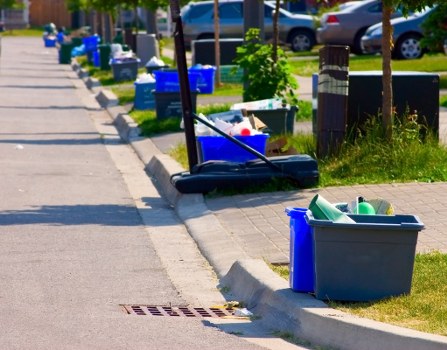
Builders Waste London is committed to reducing landfill, increasing material recovery, and supporting the capital's transition to a circular economy. Our approach to sustainability embraces collaboration with local boroughs, charities and transfer stations, and investment in a low-carbon fleet. This page outlines our recycling percentage target, our partnerships, local transfer station networks, and practical recycling activity across London boroughs. We aim to make contractor and homeowner waste management both responsible and straightforward.
 Our Recycling Percentage Target: A Clear, Measurable Goal
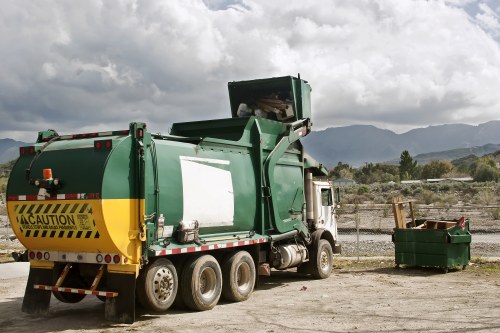
Builders Waste London has set a formal target of 65% recycling and recovery for all construction and demolition waste handled through our services by 2028. This target covers inert materials (concrete, bricks, tiles), mixed rubble, wood, metals, plasterboard and plastics. We monitor diversion rates monthly and publish anonymised performance trends to demonstrate progress. Our 65% goal aligns with borough-level ambitions and provides a stretch target beyond minimum statutory expectations, encouraging reuse, segregation on-site, and close tracking of material streams to reduce embodied carbon.
 Local Transfer Stations and Borough Collaboration
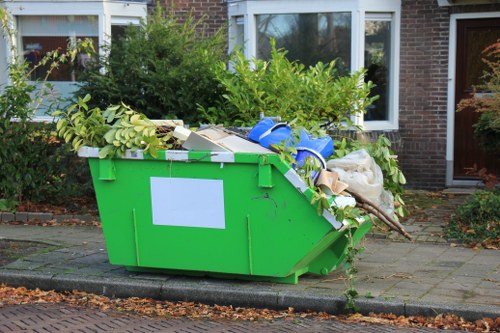
We operate closely with a network of permitted local transfer stations across Greater London to minimise haulage distances and associated emissions. These facilities act as aggregation points where waste is sorted, processed and redistributed — for recycling, recovery or reuse. By routing loads to the nearest appropriate transfer station we minimise time on the road, reduce costs and help boroughs meet their municipal and commercial waste separation policies. Our coordination ensures that materials destined for reprocessing reach specialised plants quickly and without unnecessary transport legs.
Builders waste in London needs local knowledge. Different boroughs have varying approaches to source separation: some promote strict on-site segregation by trades, others support mixed construction waste collection followed by mechanical separation. We tailor our service to the borough and client, advising on best practice such as separate streams for clean wood, metals, plasterboard, and hardcore, while also offering dedicated bins for hazardous-like small asbestos (managed to regulation) and electrical components. Our teams train operatives on-site to improve separation rates, and provide clear labelling and documentation for every load.
Key local transfer stations we use include:
- North London Transfer Hub — efficient processing for masonry and mixed construction materials;
- South East Resource Park — specialist wood and metal recovery lines;
- West London Materials Centre — plasterboard and plastic separation, plus reuse partnerships with social enterprises.
 Partnerships with Charities and Reuse Schemes
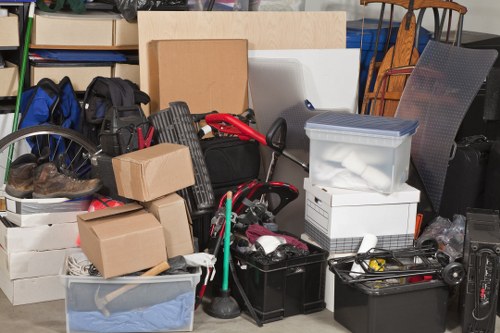
We believe diversion begins with reuse. Builders Waste London partners with several London-based charities and community projects to redirect usable fixtures, doors, windows and surplus building materials to causes that support renovation of community buildings, social housing retrofit projects, and training schemes. Our reuse streams help charities receive materials at low or no cost while lowering the carbon footprint associated with new product manufacture.
Examples of collaboration activities include scheduled drop-offs of salvageable materials, co-running collection days with community organisations, and long-term partnerships that prioritise social value. These relationships are audited to ensure materials are suitable for reuse and that liabilities are managed responsibly.
 Low-Carbon Vans and Sustainable Logistics
To reduce emissions from site visits and collections, Builders Waste London has invested in a mixed fleet of low-carbon vans and light commercial vehicles including electric vans and low-emission hybrids. Fleet routing software optimises collections to reduce empty running and consolidates collections locally where feasible. We track fleet emissions and continuously upgrade vehicles to lower-emission models as technology and infrastructure allow.
Operational measures include scheduled consolidations, off-peak collections where permitted by boroughs to avoid congestion, and driver training in eco-driving techniques. Our logistics strategy is designed to complement the boroughs' congestion and air quality policies while moving materials swiftly to recycling and reuse destinations.
Commitment to Transparency and Continuous Improvement
Builders-waste London maintains clear documentation of all material flows, providing clients and local partners with data on tonnages, diversion rates and destination facilities. We use this data to refine segregation guidance, improve contractor performance and identify opportunities for increased reuse. Our sustainability team reviews processes quarterly to find gains in recycling performance and to adapt to changing borough policies.
By combining a 65% recycling percentage target, strong local partnerships, strategic use of transfer stations, charity reuse schemes and a low-carbon vehicle strategy, London builders waste management becomes an integrated effort that benefits clients, communities and the environment. We remain focused on tangible outcomes: less landfill, more recycled material re-entering the economy, and lower transport emissions across Greater London.
Get involved locally — whether you are a contractor working across borough boundaries or a developer seeking to improve site-level waste performance, adopting clear separation practices and choosing a sustainability-minded partner helps drive the circular economy. Builders Waste London is committed to playing that role, connecting industry practice with local need and charitable reuse to create a more sustainable built environment.