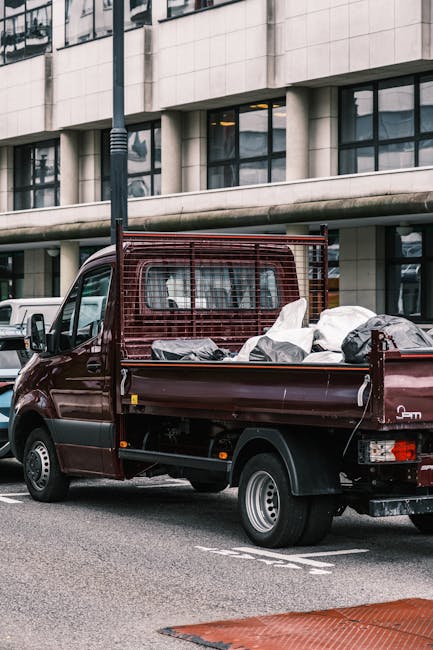
Transparent Pricing: What's Included in UK Rubbish Removal Quotes

Rubbish removal quotes should feel straightforward, not like a small mystery wrapped in fine print. Yet many people only discover the real cost after the job has started, the van is full, or someone mentions "extra labour" in a way that makes your stomach sink a little. This guide explains Transparent Pricing: What's Included in UK Rubbish Removal Quotes, so you can compare providers properly, spot hidden charges early, and feel confident about what you're paying for.
Whether you're clearing old furniture from a flat, dealing with builders' waste after a renovation, or just trying to get rid of a stubborn pile in the garden, clear pricing matters. It protects your budget, saves time, and helps you avoid awkward surprises on collection day. Let's be honest, nobody wants to negotiate while standing beside a heap of broken plasterboard at 8:15 on a wet Tuesday morning.
At its best, a transparent rubbish removal quote tells you exactly what is included, what might cost more, how the service is calculated, and what happens if the load changes. That clarity is what separates a reliable service from a risky one.
- Why transparent pricing matters
- How rubbish removal quotes work
- Benefits for homeowners, landlords, and businesses
- Who this is for
- Step-by-step guidance
- Expert tips
- Common mistakes to avoid
- Tools, resources, and recommendations
- Law, compliance, and best practice
- Options and comparison table
- Real-world example
- Practical checklist
- Frequently asked questions
Why Transparent Pricing: What's Included in UK Rubbish Removal Quotes Matters
Transparent pricing is not just a nice extra. It is the difference between feeling in control and feeling cornered. In the UK rubbish removal market, quotes can vary because loads differ, access conditions differ, and disposal costs differ. That is normal. What should not happen is a quote that looks simple at first glance but leaves out core costs until the last minute.
A clear quote gives you a realistic picture of the whole job. That usually means the collection fee, labour, transport, disposal, and any specific add-ons are explained before anyone turns up. If you are comparing services, you need to know whether you are seeing a genuine all-in price or just the starting point.
This matters especially for jobs with a few moving parts. A loft clearance with awkward stairs, a garden with a long carry to the vehicle, or mixed builders' waste in several bags can all affect the final cost. Without transparency, those changes can become an unpleasant surprise. With it, they are just part of the conversation.
There is also a trust angle. A company that explains pricing clearly often explains the rest clearly too: what waste it can take, what it will not take, and how collections are handled. That kind of openness usually signals a better experience overall. Not always, but usually.
For customers, transparent pricing reduces the chance of:
- hidden surcharges after the job is done
- misunderstandings about load size or weight
- confusion over labour or access charges
- uncertainty about VAT, disposal, or recycling fees
- pressure to agree to extras on the spot
Expert takeaway: If a quote is genuinely transparent, you should be able to explain it back in plain English. If you cannot, there is probably a detail missing somewhere.
Table of Contents
- Why Transparent Pricing: What's Included in UK Rubbish Removal Quotes Matters
- How Transparent Pricing: What's Included in UK Rubbish Removal Quotes Works
- Key Benefits and Practical Advantages
- Who This Is For and When It Makes Sense
- Step-by-Step Guidance
- Expert Tips for Better Results
- Common Mistakes to Avoid
- Tools, Resources and Recommendations
- Law, Compliance, Standards, or Best Practice
- Options, Methods, or Comparison Table
- Case Study or Real-World Example
- Practical Checklist
- Conclusion
- Frequently Asked Questions
How Transparent Pricing: What's Included in UK Rubbish Removal Quotes Works
Most UK rubbish removal quotes are built from a few core factors. Different companies package these differently, which is why one quote can look lower than another even when the final cost is broadly similar. The trick is to compare like for like. Sounds obvious, but in practice it is where people get caught out.
In a transparent quote, the provider should explain how the price is calculated. That usually involves one or more of the following:
- Volume of waste: how much space your rubbish takes up in the van or container
- Type of waste: general waste, garden waste, bulky items, builders' debris, or specialist materials
- Weight or density: some heavy materials cost more because disposal is costlier
- Labour: loading, carrying, and handling the waste
- Access: stairs, distance from the property, narrow pathways, or parking issues
- Disposal and recycling: the route the waste takes after collection
- VAT and administration: whether tax is included in the price shown
Some companies quote a flat rate for a standard load. Others use a more tailored estimate after you send photos, describe the waste, or request a site visit. Neither approach is automatically better. What matters is whether the method is explained clearly and consistently.
A practical example helps. Imagine you have a small amount of renovation waste: a few bags of rubble, a broken sink, some timber offcuts, and old packaging. One provider may give you a base price for a quarter load, then add a disposal fee for heavy inert waste. Another may offer an all-in collection price for mixed builders' waste. If both are transparent, you can see which one suits your job better. If neither is clear, well, that is a cue to keep looking.
For readers who want to compare service details more directly, the company's pricing and quotes information is the natural place to start. It helps set expectations before you request a collection.
Key Benefits and Practical Advantages
The main benefit of transparent pricing is obvious: fewer surprises. But the practical upside goes further than that. Once you understand what is included, you can make better decisions about timing, preparation, and which service is actually right for the job.
Here are the advantages people notice most often:
- Easier budgeting: you can plan around a realistic total cost
- Cleaner comparisons: you compare genuine value, not just headline figures
- Faster decisions: clear pricing reduces back-and-forth
- Better job prep: you know whether to sort, bag, move, or separate waste before collection
- Less friction on site: fewer awkward conversations when the team arrives
- More trust: openness on pricing usually reflects openness elsewhere
There is also a subtle time-saving benefit. If the quote already accounts for access, weight, and waste type, you are less likely to need a second visit or a revised invoice. That can matter a lot when you are juggling builders, a house move, or a weekend clear-out and time is already tight.
Another upside is peace of mind. You do not need to become a waste industry expert just to book a collection. Transparent pricing does the heavy lifting for you. Nice, really.
Who This Is For and When It Makes Sense
Transparent pricing is useful for almost anyone booking rubbish removal, but it becomes especially important when the job is not tiny or simple. If you only have one black bag, you probably just want a quick collection. If you have a mixed load, a renovation project, or a property clearance, the quote deserves more scrutiny.
This is particularly relevant for:
- Homeowners clearing lofts, garages, sheds, or garden waste
- Landlords and letting agents dealing with end-of-tenancy rubbish
- Builders and trades managing project waste after a job
- Office managers needing bulky item removal or clearance
- Property developers balancing multiple waste streams and deadlines
- Businesses looking for a one-off clearance instead of a long-term contract
It also makes sense when you are comparing rubbish removal against skip hire. Skip pricing can be straightforward in one way, but it comes with permits, space limitations, loading restrictions, and timing issues. Rubbish removal quotes may include loading and same-day service, which changes the value equation. For tight streets, blocked driveways, or flats without easy access, that difference can be significant.
If you are unsure about trust signals, the company's about us page can help you understand who you are dealing with, while insurance and safety details are useful when the work involves larger or heavier items. That kind of background matters more than people sometimes think.
Step-by-Step Guidance
If you want a quote that is easy to understand and genuinely comparable, follow a simple process. It does not have to be complicated. In fact, the simplest approach is often the best.
- List what needs removing. Write down the main waste types: furniture, bags, rubble, wood, soil, appliances, or mixed rubbish.
- Estimate volume roughly. Think in terms of how much van space the waste might take. A couple of bags is very different from a roomful of debris.
- Note access issues. Mention stairs, narrow gates, parking restrictions, or long carry distances. These details affect labour time.
- Ask what is included. Confirm whether the quote covers loading, disposal, recycling, VAT, and any minimum charges.
- Check exclusions. Ask about items that may cost extra or cannot be accepted at all.
- Request written confirmation. Even a short email or message helps avoid confusion later.
- Compare total value, not just the headline number. A slightly higher quote can be better if it includes more and avoids add-ons.
A small but useful habit: take a few photos in daylight. Not dramatic, not staged, just normal pictures of the rubbish from a couple of angles. That makes a quote more accurate. And yes, the morning light in a cluttered kitchen can be less flattering than expected. The waste never looks smaller in the photos, oddly enough.
Once you have the quote, read it like a checklist rather than a sales pitch. Does it state the type of waste? Is there a collection window? Are there any access assumptions? If those answers are clear, you are in good shape.
Expert Tips for Better Results
A few simple habits can make a big difference to both pricing accuracy and the overall experience. These are the kinds of things that save people money without turning the process into a project of its own.
- Be specific about waste type. "Mixed rubbish" is fine in general, but if you can separate plasterboard, rubble, green waste, or furniture, say so.
- Be honest about volume. Underestimating usually leads to revised costs. Better to be slightly cautious at the start.
- Ask whether labour is included. Some providers base their quote on collection only; others include loading from inside the property.
- Check whether the price is fixed or estimated. Fixed pricing gives more certainty, while estimates may change if the load differs.
- Confirm how payment works. You should know when payment is due and what methods are accepted. The company's payment and security page can be a useful reference if you want clarity before booking.
- Ask about recycling. A clear quote should not hide how the waste will be handled. The way waste is processed matters.
Another tip: if the quote sounds unusually cheap, ask what is not included. Sometimes the answer is perfectly reasonable. Sometimes it is the clue you needed. A quote can be low for all the wrong reasons.
And do not overlook communication. A provider who answers pricing questions plainly is often easier to deal with on collection day. That matters when the van is outside, the rain is falling, and everyone wants the job done quickly.
Common Mistakes to Avoid
Most pricing problems are avoidable. They happen because people focus on the headline number and skip the details. To be fair, that is understandable. Nobody enjoys reading small print at the best of times.
Watch out for these common mistakes:
- Comparing only the cheapest quote: low prices can exclude loading, disposal, or VAT
- Not disclosing stairs or access issues: this can change the quote later
- Assuming all waste is priced the same: heavy or restricted materials often cost more
- Ignoring minimum charges: some services have a floor price even for small loads
- Failing to ask about additional items: a few extra bags or an appliance can alter the final total
- Booking without written confirmation: verbal quotes can be misunderstood
One particularly common issue is load creep. The quote is based on a certain amount of waste, but by collection day a few extra things have been added. A chair here, two sacks there, and suddenly the vehicle space changes. Not a disaster, but worth managing from the start.
Another mistake is forgetting that labour has value. If someone is carrying items down three flights of stairs, through a tight hallway, and out to a parked vehicle in London traffic, that is not the same as lifting bags from a driveway. It just isn't.
Tools, Resources and Recommendations
You do not need specialist software to get a better quote, but a few practical tools help a lot.
- Phone camera: take clear photos of the waste and access route
- Simple notes app: list item types, approximate quantities, and any hazards
- Measuring tape: useful for bulky items or awkward spaces
- Basic sorting bags or boxes: help distinguish recyclable items from general rubbish
- Checklist for questions: keep one ready so you do not forget to ask about extras
On the provider side, useful supporting information often includes pricing guidance, recycling policy, safety information, and company background. You can also review the company's recycling and sustainability approach if you want to understand how collected waste is managed after removal. That is especially helpful for customers who care about disposal routes, not just the pickup itself.
If you have any questions about arrangements, the contact us page is the obvious next step. And if you need broader reassurance about how a company operates, its terms and conditions and privacy policy can also help you understand what to expect before you commit.
For reference, the company's own health and safety policy is worth reviewing whenever lifting, loading, or site access might create risk. Practical businesses are usually proud to show this stuff. Fair enough too.
Law, Compliance, Standards, or Best Practice
Rubbish removal pricing is not only a commercial issue; it is also tied to wider responsibilities around waste handling, duty of care, and safe working practices. You do not need to become a compliance expert to book a collection, but you should expect the provider to act responsibly and explain things clearly.
In practical terms, best practice usually means:
- being clear about what waste can and cannot be taken
- handling waste in a way that supports proper recycling and lawful disposal
- setting out pricing and assumptions honestly before collection
- using safe methods for lifting, loading, and transport
- communicating any restrictions or extra requirements in advance
For the customer, this means a transparent quote should never feel evasive. If a company is vague about restricted materials, unclear about disposal, or unwilling to explain charges, that is worth treating as a warning sign. You are not being difficult by asking. You are being sensible.
Insurance and safety are part of the same picture. If a heavy item gets damaged while being moved, or if a tight access route increases risk, the provider should have processes in place. That is one reason many customers prefer to work with businesses that make their procedures available openly, including insurance and safety information and a clear complaints procedure. Nobody wants to use that last one, obviously, but it is reassuring to know it exists.
Options, Methods, or Comparison Table
Different pricing models suit different jobs. The best option depends on your waste type, volume, access, and how much certainty you want before collection day.
| Pricing method | How it usually works | Best for | Things to check |
|---|---|---|---|
| Flat-rate quote | One set price for a defined job or load size | Simple clearances and predictable loads | What load size is included, and what counts as extra |
| Photo-based estimate | Quote based on images and description | Most household and light commercial jobs | Whether the price is fixed or may change on arrival |
| On-site assessment | Provider views the waste before confirming cost | Large, mixed, or awkward collections | Whether the visit is free and how long the quote remains valid |
| Load-based pricing | Price varies with how much van space your waste takes up | Jobs that may grow or shrink slightly | How the company measures load and handles partial fills |
In practice, many customers value a photo-based fixed quote because it balances convenience with certainty. You send a few pictures, answer a couple of questions, and get a price that is easier to trust. For bigger jobs or mixed waste, an on-site assessment can be better, especially when access is tight or the contents are not obvious from photos alone.
There is no single winner here. The right method is the one that tells the truth about the job before anybody starts lifting.
Case Study or Real-World Example
Here is a realistic example from a typical London property clearance scenario.
A homeowner in a terraced house has cleared out a spare room and the back garden. The waste includes a broken wardrobe, two mattresses, several black bags, old shelving, and a small pile of garden cuttings. Access is narrow through the rear passage, and there are a few steps down into the yard.
At first glance, it looks like a simple collection. But the load is mixed, the access is awkward, and the waste has to be carried a fair distance. A transparent quote would explain:
- the estimated volume of waste
- the mix of furniture, general rubbish, and garden material
- the labour involved in moving items from the back of the property
- whether mattresses or other bulky items affect the price
- if any recycling or disposal charge is included
The customer can then decide whether to book the collection, sort the waste further to reduce cost, or schedule it for another day when more items are ready. That is the value of transparency. It gives people options.
And that is really the point. A quote should not just tell you what something costs. It should help you understand why it costs that much. When that happens, decisions feel calmer and more sensible.
Practical Checklist
Use this checklist before you accept any rubbish removal quote.
- Have I described all the waste clearly?
- Have I included photos or enough detail for an accurate estimate?
- Do I know whether labour is included?
- Is disposal included in the quoted price?
- Have I checked for VAT, minimum charges, or extra fees?
- Have I mentioned access issues such as stairs, parking, or narrow entrances?
- Do I understand what waste types are excluded?
- Is the quote fixed, estimated, or subject to review on arrival?
- Have I reviewed payment terms and security details?
- Have I asked for confirmation in writing?
One more useful check: ask yourself whether the quote still makes sense after you remove the "sales voice" and read it as a simple list of costs. If it does, you are probably looking at a transparent offer.
Conclusion
Transparent pricing in UK rubbish removal is about more than avoiding nasty surprises. It helps you compare providers fairly, understand what you are paying for, and book a collection with confidence. The best quotes are the ones that explain the waste type, labour, access, disposal, and any extra charges in plain language. No drama, no guessing.
Once you know what should be included, you can spot value more easily and avoid paying for uncertainty. That is good for your budget, good for your schedule, and honestly just better for your peace of mind. The whole process becomes a lot less stressful when the numbers make sense from the start.
If you are comparing options now, take a moment to gather photos, note the access details, and ask direct questions. You will usually get a better result than by chasing the cheapest headline price. And if the answer still feels muddy, trust that instinct. It usually means there is something worth clarifying.
Get a free quote today and see how much you can save.
Clear pricing should leave you feeling informed, not cornered. That is the standard worth aiming for.
Frequently Asked Questions
What should be included in a rubbish removal quote?
A transparent quote should normally include collection, loading, transport, disposal, and any clearly stated extras such as VAT or access-related charges. It should also explain the waste type and the basis of the price.
Why do rubbish removal quotes vary so much in the UK?
Prices vary because waste type, volume, weight, access, and labour all affect the job. A simple driveway collection will usually cost less than a mixed clearance from a top-floor flat with awkward stairs.
Is the cheapest quote always the best value?
Not always. A low quote can leave out labour, disposal, or other costs. Value is better judged by comparing what is actually included, not just the headline figure.
Should rubbish removal pricing be fixed or estimated?
Fixed pricing gives more certainty, while estimates can change if the waste differs from what was described. Either can work well if the provider explains the method clearly and in advance.
Do I need to sort the waste before asking for a quote?
Not necessarily, but it helps. If you can separate garden waste, rubble, furniture, or general rubbish, the quote is usually easier to price accurately.
Can a rubbish removal quote change on the day?
Yes, if the waste volume, type, or access differs from what was originally described. That is why it is worth giving accurate details and photos from the start.
Are labour charges usually included in UK rubbish removal quotes?
Sometimes yes, sometimes no. It depends on the provider and the type of service. Always check whether loading from inside the property is included.
What are hidden fees in rubbish removal?
Hidden fees are costs that were not made clear before booking. Common examples include extra charges for heavy waste, difficult access, minimum load thresholds, or VAT not shown in the initial price.
How can I compare rubbish removal quotes properly?
Compare what each quote includes, not just the price. Look at waste type, labour, disposal, access assumptions, and whether the price is fixed or estimated.
Does transparent pricing mean the quote will never change?
Not always. If the waste changes materially or the site conditions are different from what was described, a revision may be fair. The key is that the reason should be explained clearly.
What information should I send to get a more accurate quote?
Send a clear description of the waste, a few photos, access details, and anything unusual such as stairs, parking limits, or fragile surroundings. The more context you give, the better the estimate is likely to be.
Where can I find more information before booking?
You can review the company's pricing and quotes, recycling and sustainability, and terms and conditions pages to understand how the service is structured before you decide.